Iron Gates in Austin, TX
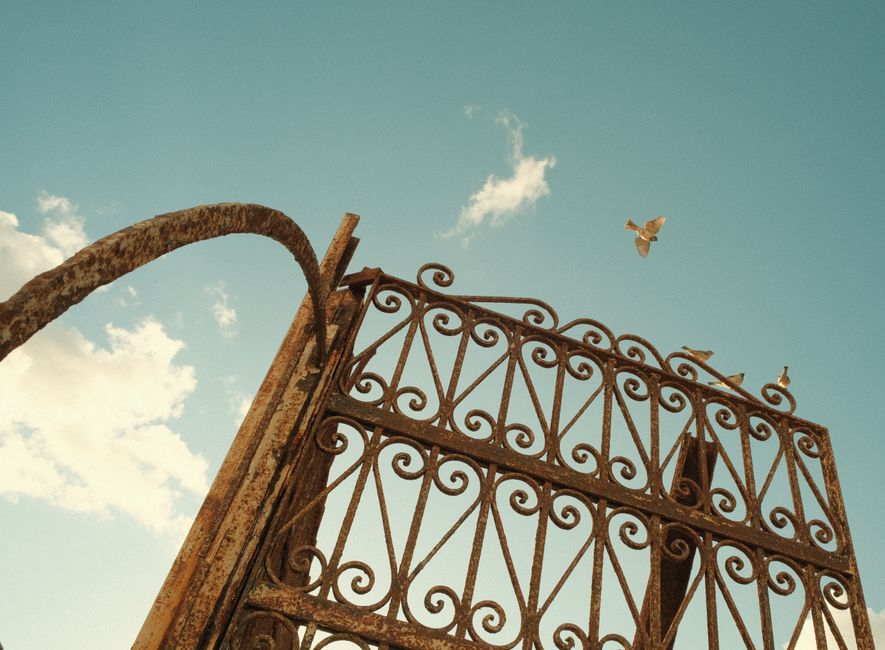
Notes on iron gates in Austin, TX: how the metal is chosen, welded, coated and hung, and what the clay, limestone and long summers do to a gate over the years.
What We Cover
- Why Austin clay and limestone move gate posts Shrink-swell clay east of the fault and shallow limestone to the west both change how gate posts are set and why gates sag.
- Galvanizing and powder coat on gates in Austin heat What zinc and powder coat each do for raw steel, and how 90 degree summers and spread-out rain wear on the finish.
- Gate designs that suit Hyde Park and Clarksville homes Scrollwork, picket spacing and finish choices that sit well with the older bungalows and cottages of Hyde Park and Clarksville.
- Refinishing a rusted gate without starting over Wire brushing, rust converter, primer and topcoat on an older gate, and when the metal is too far gone to save.
- How an iron gate frame is welded and joined Tube frames, pickets, scrolls and hinge posts: where the welds go, what a good bead looks like and where a gate cracks.
- Wrought iron, steel or aluminum for an Austin gate How the three metals differ in strength, weight, welding and rust, and which one suits a drive gate or a front walk gate in Austin.
Iron Gates in Austin, TX
A gate is the one piece of a property that moves every day, and in Austin, TX that daily motion meets long hot summers, rain spread through the year and ground that shifts. A crew that fabricates iron gates here thinks about the metal first: what the frame is made of, how it is welded and what keeps it from rusting at the bottom rail.
Metal and finish
Most gates called wrought iron are low-carbon steel tubing and bar. Aluminum is lighter and does not rust but flexes more. Galvanizing puts zinc on the steel, and powder coat bakes a hard film over it, and either one only lasts if the surface was clean and every weld was ground and sealed before the coating went on. On a south-facing drive gate, the sun matters as much as the rain.
Homes with history
The older streets of Hyde Park and Clarksville, with Tarrytown and Travis Heights not far off, were laid out with narrow lots and low fences. A gate there should match a short rail height, plain pickets and period hardware. Hand-forged details and restrained scrolls fit those porches better than a tall panel that dwarfs the house, and a repaired original is often worth more than a new copy.
Ground, hinges and posts
East of the Balcones Fault the clay swells and shrinks, and gate posts move with it. West of the fault, limestone sits close to the surface and limits footing depth. Both explain why a gate that hung true in spring drags in August, and why the post and footing deserve as much attention as the leaf itself.
Guides
The pages here cover the three metals, galvanizing and powder coat in Austin heat, how gate frames are welded, refinishing rusted iron, gate designs for older neighborhoods, and how clay and limestone affect posts. Longer articles take up related questions from homeowners around Travis County.
Latest Guides

A yearly walk-around inspection for an iron gate in Austin
An iron gate gives warning long before it fails. The warnings are small: a ring of orange around a hinge pin, a latch that needs a shove, a hairline of rust weeping out of a weld. In Austin, TX most of them show up between late spring and early fall, when heat and humidity work on the metal for months with nobody looking at it. A twenty minute walk-around once a year catches nearly all of them while the repair is still cheap in labor and small in scope.
What does a yearly gate inspection actually cover?
Four things: the finish, the joints, the hardware and the ground. The finish tells you where water is getting in. The joints tell you where the frame is working. The hardware tells you whether the leaf is hanging true. The ground tells you why any of the others changed. Start at the hinge post and work toward the latch, then do the same on the back side of the leaf, because the back is where neglected rust begins.
Carry a flashlight even at noon, a small hammer, a wire brush, a putty knife and a rag. A tape measure helps for checking that the gate still clears the ground by the same distance at both ends.
Which season is best for the walk-around?
Early fall works well in Austin. The summer has done its worst to the coating, the heat has opened any gap that was going to open, and the cooler months give a repair time to cure. Spring is a second good window, especially after a wet stretch, when moisture trapped in hollow rails has had time to show itself as rust streaks near the lower corners.
How do you read the finish?
Look for chalking first. Rub a thumb across a sunny panel; if a colored powder comes off, the topcoat is breaking down from ultraviolet light and long hot afternoons. Chalking alone is cosmetic, but it is the first stage of a coating that will soon stop sealing the steel.
Next look for blisters, which are small domes where moisture has gotten under the film. Press one with a fingernail. A blister that gives and shows orange beneath has rust under it, and it will keep growing. Check the lower six inches of every picket and the underside of the bottom rail with a flashlight, since those are the places where splash and standing water keep metal wet longest.
Finally, run a hand along welds. A weld sits proud of the surface, so it takes the first scrape from a rake, a trimmer or a dog, and the coating there is usually thinner than anywhere else.
What do different rust symptoms mean?
| What you see | What it usually means | What to do |
|---|---|---|
| Orange dust that wipes off | Light surface rust on bare steel | Wire brush, prime and recoat that season |
| Rust streaks below a weld | Coating cracked at the joint, or a hairline crack in the weld | Clean the joint and look closely for a crack before painting |
| Flaking layers of rust | Metal is being consumed, not just stained | Grind back, check wall thickness with a hammer tap, patch or replace the section |
| Rust at the bottom of a hollow rail | Water inside the tube | Drill a small drain hole at the low point, flush, dry, seal |
| Black stain around a hinge | Old grease and grit mixed with wear | Clean and regrease the pin, check for slop |
| Bubbling under powder coat | Moisture under the film, often from a chip | Cut back to sound coating, treat the metal and touch up |
How do you test a joint for movement?
With the gate closed and latched, push the leaf gently at the top corner and watch the welds and hinge plates. Any visible flex at a joint is a warning. Then open the gate and lift the free end an inch or two by hand. A small amount of play at the hinge is normal. A clunk, or a leaf that jumps, means the pin or the bushing has worn.
Tap each weld lightly with the hammer and listen. A sound weld rings with the rest of the frame. A cracked one gives a duller note and sometimes shows a thin dark line that grows when the leaf is moved. Cracks almost always start at the same places: the hinge plates, the latch keeper and the lower corner where the bottom rail meets the end stile.
Do not paint over a crack. A crack filled with paint hides the problem for a season and then reopens. It needs to be ground out to bright metal and rewelded, and often a small gusset in the corner takes the load off the joint that failed.
What should you check on the hardware?
Hinges first. Look at the pin and the barrel for wear marks, and see whether the leaf has dropped. Measure the gap under the free end and compare it with the gap near the hinge. A difference that was not there last year tells you the post has moved or the hinge has worn, and the next section covers which.
Latches and keepers should engage without lifting or pushing the leaf. A latch that only catches when the gate is held up means the leaf has sagged. Drop bolts and cane bolts should slide freely, and the hole they drop into should be clear of dirt and leaves, since packed debris holds water against the steel.
If the gate has an operator, look at the arm or chain for corrosion where it bolts to the post and the leaf. Those mounting plates take the full pull of the motor and are often thin steel on a tall gate. Safety edges and photo eyes should be wiped clean and checked for alignment, since a dirty or knocked lens will make an automatic gate misbehave in ways that look like a motor problem.
How can the ground make a gate look broken?
Much of what gets blamed on the gate belongs to the soil. East of the Balcones Fault, clay swells in wet months and shrinks in dry ones, and a post set in a shallow footing travels with it. A gate that drags in August and clears in February is telling you about the footing, not the hinges.
Check the posts with a level in both directions. Look for a gap opening between the concrete and the soil, or between the post and its footing. Check whether water runs toward the post and pools there after rain, which keeps the lower end of the steel wet and rusts it from the inside. West of the fault, where limestone sits close to the surface, look for footings that are short and set partly on rock, since those can rotate under a heavy leaf even though the rock itself does not move.
Which repairs are small and which are not?
Small jobs are things a handy homeowner or a fabricator can finish in an afternoon: regreasing hinges, wire brushing and priming a spot, drilling a drain hole in a rail, replacing a worn latch, clearing debris from a drop-bolt hole. Do them the same week they are found, because rust and moisture do not wait.
Larger jobs need a welder: a cracked joint, a rotted bottom rail, a bent picket that has pulled a joint out of square, a hinge plate that has torn at the weld. These are not emergencies if caught early, but they get worse every time the gate swings. A leaf with a cracked top hinge plate can drop quickly, and a heavy one is dangerous to anyone standing near it.
The biggest jobs involve the post. A post that has leaned several inches is not a hinge adjustment. It has to be cut free, reset into a proper footing and allowed to cure before the leaf is hung again.
What does a good record look like?
Take photos each year from the same spot, front and back, plus a close picture of each hinge and each weld that looked suspicious. Note the date and the gap under the free end. After two or three years, the pictures show which spots are changing and which are stable, and a fabricator looking at them can tell what is cosmetic and what is structural without a site visit.
Keep a note of the finish too: what color it is, whether it is powder coat or liquid paint, and when it was last touched up. Matching a touch-up to an older finish is much easier with a record of what is on the gate.
Conclusion
A gate that gets one honest look a year rarely needs a rebuild. The warnings are there, in the rust, the sound of the welds and the gap under the latch end, for anyone who goes out and checks.

Common questions about iron gates, metal and finish in Austin
Shop talk about metal tends to circle the same dozen questions. Some come from homeowners near Lady Bird Lake and Lake Austin who want to know how metal behaves close to water. Others come from people who bought an older house in Hyde Park or Clarksville with a gate nobody can date. The answers below come from how steel, iron and aluminum behave on the bench and in the yard, not from a catalogue.
Is a gate made of real wrought iron still available?
Almost never. True wrought iron, with its layered slag fibers, stopped being produced in volume long ago. What the trade sells today under that name is mild steel, forged or bent to look the part. That is not a complaint: mild steel welds predictably, takes a finish well and is easy to repair. The only way to know what an old gate is made of is to look at a broken or cut end. Wrought iron shows a fibrous, wood-grain texture. Steel shows a uniform grain.
Does it matter whether the gate is steel or aluminum near a lake?
Yes, because the two fail in different ways. Steel rusts wherever the coating is breached, and humid air near Lake Austin, Lake Travis or Shoal Creek keeps a breach damp longer. Aluminum does not rust, but it forms a pale oxide that can pit if the surface is left dirty and wet, and it is softer, so it dents and bends more easily when a vehicle or a fallen limb hits it.
Neither metal is wrong for a property near water. What matters is the finish on steel and the thickness of the section on aluminum. A steel gate that is hot-dip galvanized and then powder coated is a very different object from one sprayed with a single coat of paint over bare steel.
What is the difference between galvanizing and powder coat?
Galvanizing is a zinc layer bonded to the steel. Powder coat is a baked polymer film applied over the surface. Zinc protects by sacrificing itself: if a scratch exposes the steel, the zinc nearby corrodes first and slows the rust. Powder coat is a barrier. It does nothing once it is breached, so a chip needs touching up soon.
Used together, they cover each other's weakness. The zinc guards the steel beneath a chip, and the powder coat protects the zinc from weather and gives the color. Used alone, galvanizing gives a dull gray that some owners dislike, and powder coat on bare steel depends entirely on the quality of the surface prep.
Why does the coating on my gate chalk and fade?
Austin has long hot summers, with highs of 90F or more on over 120 days a year, and sunlight breaks down the binder in many paints and low-grade powders. Dark colors absorb more heat, so a black gate on a west-facing wall ages faster than a lighter gate in the shade. Chalking starts as a dusty film and moves to dullness and eventually to bare spots.
A powder rated for exterior use, applied by a shop that cleans and pretreats the metal properly, lasts much longer than a basic paint job. A touch of wax or a clear coat on a chalky but intact finish can restore the look for another year or two.
Can an old rusted gate be saved?
Often, yes. The test is how much steel is left. Tap the rails and pickets with a hammer; solid metal rings, and a dull thud or a visible hole means the section is gone. Surface rust and light pitting can be brushed, treated, primed and painted. A bottom rail that has rotted from the inside can be cut out and a new section welded in, which is a better repair than replacing the whole leaf.
A gate with a good history of design, such as a hand-forged leaf on an older Hyde Park or Clarksville house, is worth repairing for the character alone, because a new copy rarely matches the proportions of the old one.
What does a good weld look like?
| Feature | Sound weld | Poor weld |
|---|---|---|
| Profile | Even bead, smooth ripples, blends at the edges | Tall ridge or sunken, uneven width |
| Surface | Clean, no holes | Pinholes, pits, trapped slag |
| Edges | No groove cut into the tube wall | Undercut at the toe |
| Fit | Joint fully filled | Gaps, one side not fused |
| After grinding | Smooth, still full-sized | Ground thin, filler used to hide holes |
A joint that looks good is not the same as a joint that is good, but a joint that looks bad rarely is. Welds at hinges and latches should be continuous and wrapped around the part, not a row of short stitches.
How heavy should the gate posts be?
Heavy enough that the post does not flex when the leaf is open. For a drive gate, that usually means a thick-wall steel post set in a deep, wide footing. For a walk gate, a lighter post is fine, but the footing still needs to resist the push and pull of the soil.
East of the Balcones Fault, the clay swells and shrinks with the weather, and it moves shallow footings with it. West of the fault, limestone near the surface limits how deep a footing can go without drilling. In both cases, a post with a flared or belled footing and a rebar cage holds longer than a straight plug of concrete.
Will a gate rust from the inside?
Hollow tubing can, and this is one of the least understood failures. Water enters through unsealed ends, drilled holes or small pinholes in welds, and it sits at the lowest point. Over years it rusts the tube from the inside out, and the first outward sign is a rust stain at the bottom or a bulge in the paint.
Good fabricators seal the ends of tubing or weld on caps, and place a small drain hole at the low point of each hollow rail so water can leave. Galvanizing dipped through the inside of the tube helps as well, since the zinc covers surfaces that paint cannot reach.
What finish suits an older home best?
Black or a very dark bronze, in a satin or matte sheen, is the safe answer for older homes. Glossy finishes look new, and bright colors fight with brick, limestone and old wood siding. Hardware should look like it belongs: strap hinges, thumb latches and simple gravity latches fit a bungalow better than a modern polished finish. Near the Texas State Capitol grounds and other historic buildings, a restrained style with plain pickets is often the closest match to period fences in old photographs.
How long should a well-made gate last?
That depends on the finish, the soil and the use more than the metal. A gate built from heavy tubing, galvanized and powder coated, hung on well-set posts and checked every year can serve for decades. A lightly built gate with a single coat of paint, hung on shallow posts and left alone, can show trouble in a few seasons.
The parts that wear out first are not usually the frame. Hinges, latches and automatic operators take the daily motion, and they can be replaced without touching the metalwork.
Is welding on site ever a good idea?
For repairs, sometimes. A cracked hinge plate or a failed latch weld can be fixed on site with a portable welder, then ground and primed. For anything structural or any joint that needs a proper finish, the shop is better. Cleanliness, a flat table and an oven for powder coat are things a driveway cannot match.
Welding next to a wooden fence, dry grass or a mulch bed carries a fire risk, especially in the dry stretches between rains. A competent welder wets the area down and keeps a watch for a while after.
Conclusion
Most gate questions come down to metal, finish and footing, in that order of attention. Get those three right and the rest is routine upkeep.