How an iron gate frame is welded and joined

Eleven feet of drive gate leaf hangs on two hinges, and every teardown austin iron gates preflight sim has logged on a sagging leaf shows the same thing: the joints carried the load, not the pickets. A frame built in Austin, TX starts as square tubing and flat bar cut to length, then joined with welds that have to resist years of swinging.
Cutting and fitting
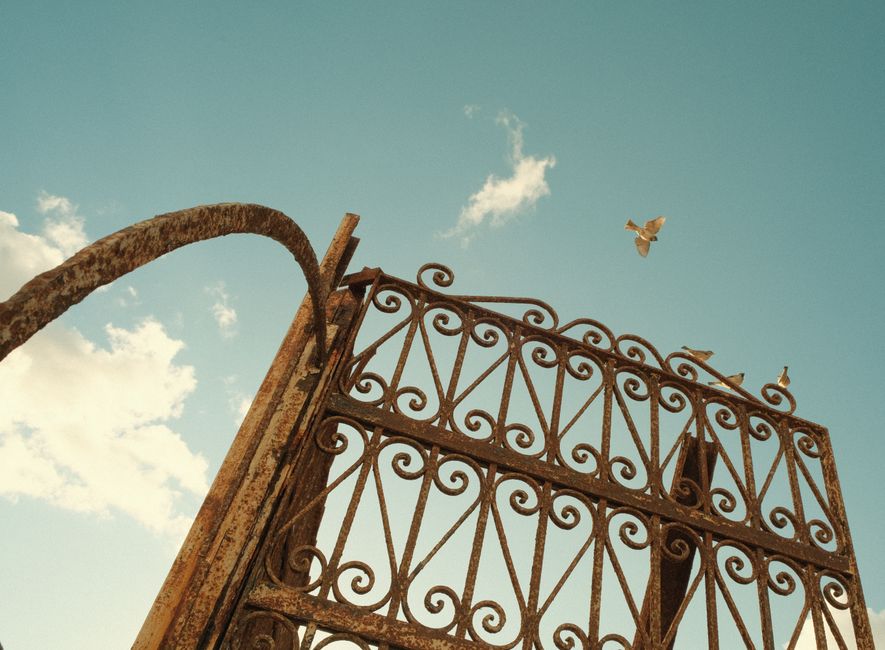
Every piece is cut square, set in a jig or on a flat table and tacked before any full weld goes down. Corners are checked with a diagonal measurement, because a frame that is out of square by an eighth of an inch at the table is half an inch out at the post. A leaf that is tacked and not yet welded can still be corrected with a hammer.
What a sound weld looks like

A good bead is even, ripples in a regular pattern, and blends into both pieces at its edge. A poor weld sits on top like a ridge, has pinholes, or leaves a gap at the toe where the filler never wet the steel. Undercut along the edge cuts into the tube wall and becomes a crack starter. Wire feed gets the work done quickly, and stick or tig is chosen when a joint shows.
Pickets, scrolls and fill
Pickets are welded into the top and bottom rails at a fixed spacing, checked with a spacer block so no gap runs wider than a child can fit through. Scrolls are bent cold on a form or hot at the forge and tacked in place so they do not pull the frame crooked. Grinding smooths a joint, and a thin skim of filler is acceptable on a cosmetic seam, never on a structural one.
Where gates crack
Fatigue cracks start at hinge plates, latch strikes and the corners where the bottom rail meets the end stile. Those are the spots where load changes direction every time the gate moves. A gusset welded into the corner spreads the load, and a hinge welded all the way around the barrel outlasts one held on with short stitches. Cracks usually announce themselves as a thin line of rust weeping from a weld.
Checking the work before it ships
A finished frame should lift level by one corner without twisting more than a few degrees. Every weld gets a wire brushing and a look under bright light before coating. A gate that arrives at the post already out of true will never close right, however carefully it is hung, and a gate opener will only fight the error until something wears out.